Subtotal ₹0.00

 Self Assessment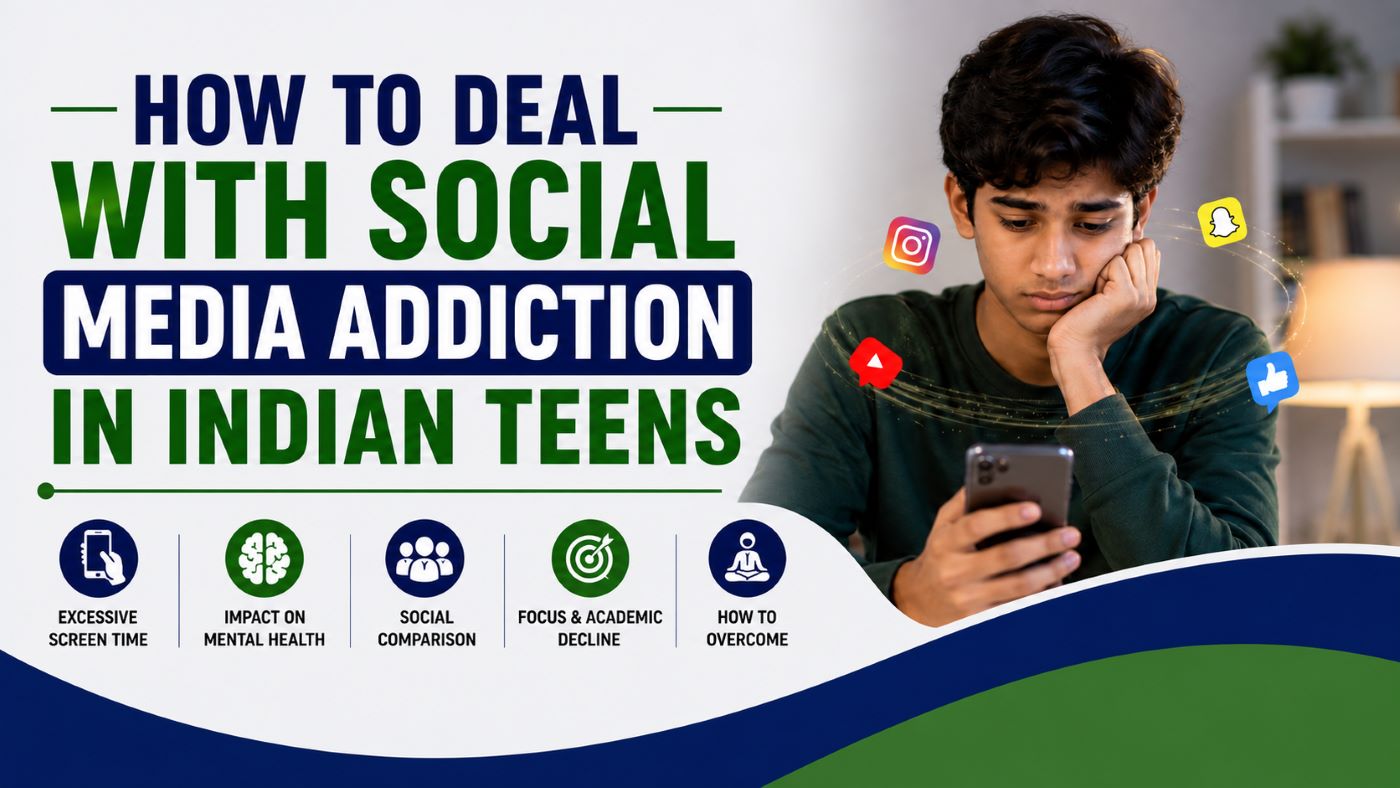
Scroll, like, comment, repeat. This loop is what millions of Indian teenagers live by on a daily basis. What was once just an activity aimed at maintaining contact with peers, for many youngsters, has now become an obsession that takes up their time, study, and even damages their self-respect.
If you’re a parent or educator concerned about the teenager you know who stays online late into the night, is irritable when prompted to log out, and nervous when he/she can’t be online, you should not worry any longer. Social media addiction is a phenomenon affecting Indian teenagers today, and learning more about it is the first step towards liberation.
Our organization helps many families all across India in dealing with exactly this problem. This blog goes over why people become addicted to social media, what those symptoms look like, and a few tips to help your teen build a healthy mindset around tech.
Why Are Indian Teens So Vulnerable to Social Media Addiction?
India, where phone use has increased dramatically in the past ten years, is among the nations with a large youth population using the internet. Teenagers are more likely to cyberbullying because of a number of elements:
- Many young people use social media like Instagram, Snapchat, and YouTube as a break from academic or home pressure.
- Peer validation: The likes, comments and followers are its dopamine and keep the teenagers coming back for more.
- Fear of missing out (FOMO): The group chat, and trending reels are good for teenagers to trigger their FOMO to prevent them from missing out on something.
- Lack of screen time restrictions: Due to lack of any restriction about screen time use by teenagers in India owing to the early usage of phones, most of the teenagers do not regulate their screen time.
- Low offline activities: Due to the lack of safe areas and heavy workload among teenagers in many Indian cities, screens replace offline activities for recreation and socializing.
Knowing these root causes allows parents to respond with empathy, rather than frustration, which does make a real difference in how receptive teens are to change.
Warning Signs of Social Media Addiction in Teenagers
Not every teenager who likes Instagram or WhatsApp is addicted. It’s a matter of how disruptive the habit is to day-to-day functioning. Here are these symptoms to watch for:
| Warning Sign | What It Looks Like |
| Loss of control | Repeated failed attempts to cut down screen time |
| Withdrawal symptoms | Irritability, restlessness or anxiety when phone access is limited |
| Neglecting responsibilities | Falling grades, missed assignments, skipped meals or sleep |
| Emotional dependence | Mood swings tied to likes, comments, or online validation |
| Social withdrawal | Preferring online interaction over family time or in-person friendships |
| Secretive behaviour | Hiding phone usage, lying about screen time, or using devices late at night |
| Physical symptoms | Eye strain, headaches, disturbed sleep or posture-related back and neck pain |
If a youth (beneficiary) shows multiple signs of distress during a visit or home-based session visit (daily, weekly) and more signs of distress at any point or at the end of the session, it may be necessary to refer for professional support as willpower may not be sufficient at this time.
Practical Ways to Help Your Teen Deal with Social Media Addiction
1. Start the Conversation Without Judgment
The typical start of the conversations that parents have with their teens – the finger-pointing – puts them on the defensive. Rather, parents need to begin posing open-ended questions – “What do you like most about being on the Internet?”
2. Set Realistic Screen-Time Boundaries
Instead of a sudden digital detox, try out gradually increasing restrictions on your use of screens, such as no phones during mealtimes, an hour before bedtime, or when studying. There are apps that allow you to monitor and restrict your use of devices.
3. Encourage Offline Interests
Encourage your teen to find screen-free hobbies – like sports, music, art or reading. When young people experience real fulfillment from activities that aren’t online, the hold of social media is naturally less powerful.
4. Model Healthy Digital Habits Yourself
Teenagers tend to follow the example set by their parents. When screens are everywhere in the house, it will be difficult to get a teenager to reduce his or her screen time. Establishing a “no phone” hour for the whole family will make the limit seem reasonable.
5. Address the Underlying Emotional Need
Sometimes, overusing social media might point to other issues including anxiety, loneliness, low confidence, and school pressure. Rather than treating the symptom of this issue, it is usually advisable to discuss your child’s actual emotions.
6. Involve Schools and Peer Groups
Schools have a part to play here through digital literacy and screen-free activities. Peer-to-peer discussions regarding the healthy use of social media are usually more engaging to teenagers than any guidance from adults.
7. Seek Professional Help When Needed
The Basic Policy applies when the mental state of the teen, its sleep-wake cycle, school performance or relations with others are substantially affected by social media use and professional support is required. A psychologist or counselor skilled in adolescent behavior can assist a teenager in following a proper recovery program including cognitive behavioral methods.
When Should You Consult a Specialist?
Consider consulting a mental health expert if you see any of the following symptoms in your teenager:
- He/She shows signs of depression, anxiety or social isolation caused by his/her use of the Internet.
- He/She has tried to curb the use but has not succeeded.
- There is an aggressive and excessive reaction from him/her when access is denied.
- He/She is struggling academically and socially isolating from friends and family.
There are indications of cyberbullying, online harassment and harmful social comparisons.
How Nirvan Hospital Can Help
At Nirvan Hospital, we realize the special challenges that Indian adolescents have to cope with being part of a connected generation. At our hospital, we provide counseling for teenagers, behavioural therapy for them, and family therapy which helps them develop better online behaviour along with addressing any psychological issues they may be having.
If you’re worried about the social media activities of your kids, then you should definitely consider consulting us for their benefit.
Key Takeaway
Social media addiction in Indian teens can affect sleep, academic performance, emotional wellbeing and family relationships. The most effective approach is to combine open communication, healthy screen-time boundaries, offline activities and professional counselling when excessive social media use begins to interfere with daily life.
Final Thoughts
Dealing with social media addiction in an adolescent involves more than taking away their access to technology. Rather, it means ensuring that the young person is able to develop a healthy attitude towards the digital environment. With time and the appropriate help from qualified professionals, Indian adolescents will be able to use social media in a way that benefits them and doesn’t ruin their lives.
If you require advice and help with your particular situation involving your teenager, we are ready to provide it to you through Nirvan Hospital. Contact us to book a consultation.
Frequently Asked Questions
Is social media addiction a recognised mental health condition in India?
Professional support would be required if social media use significantly affected the teenager’s psychological well-being, learning, social interactions, or sleep-wake cycle.
How much screen time is considered healthy for teenagers?
There is no magic number, but most experts agree on no more than two hours of screen leisure time per day for teens with tight restrictions around sleep and study.
Can social media addiction be treated without medication?
Indeed. In most instances, behavioral therapy, counseling, and lifestyle modification are sufficient to assist adolescents in regaining control. Medication would be recommended only in the event of other conditions such as severe anxiety or depression.
What should I do if my teen refuses to cut down on social media use?
Avoid conflicts of power. Gradual limit-setting, open dialogue and professional support are typically more effective than outright banning, which can just fuel the resistance.
Comments are closed