Subtotal ₹0.00

 Self Assessment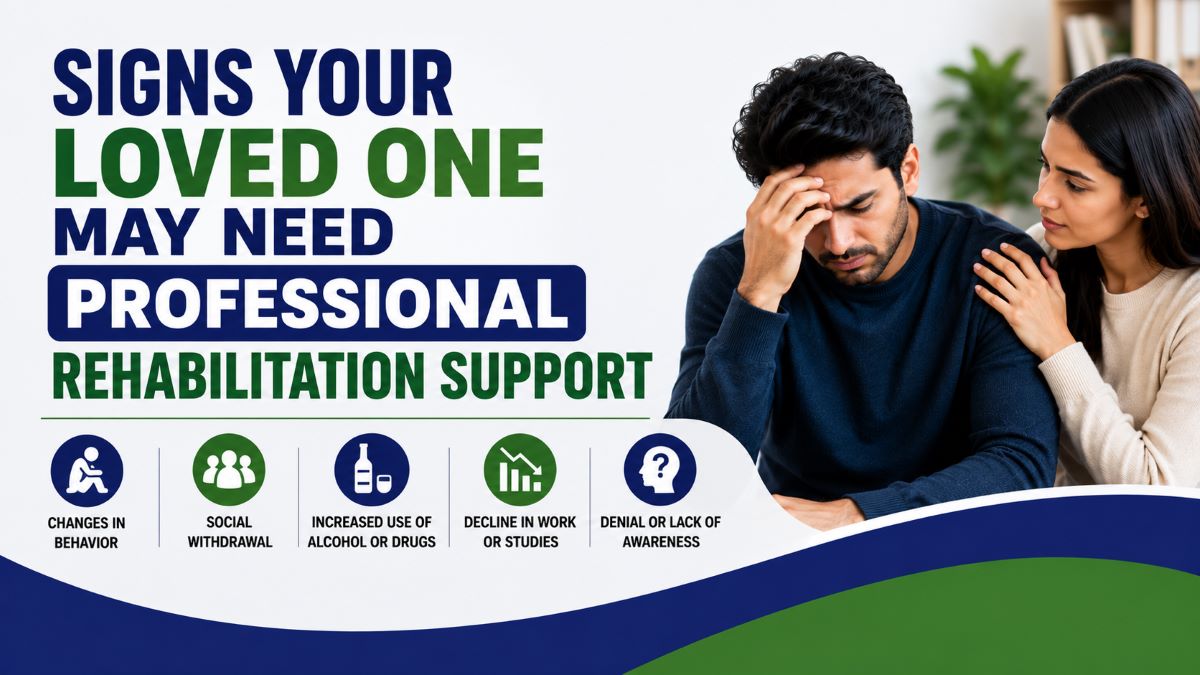
Key Takeaways
- Persistent changes in behaviour, mood, appearance, relationships, work, sleep or daily responsibilities may indicate an underlying mental health or substance-use concern.
- Social withdrawal, mood swings, declining performance, financial secrecy and increased substance tolerance are important warning signs to pay attention to.
- Not every behavioural change means addiction or mental illness, so a professional assessment is important before reaching conclusions.
- A calm, private and non-judgmental conversation can make it easier for a loved one to accept support.
- Professional rehabilitation may include inpatient care, outpatient treatment, counselling, de-addiction support, family therapy and aftercare, depending on the person’s needs.
- Withdrawal symptoms, physical dependence, worsening daily functioning or repeated unsuccessful attempts to stop substance use are reasons to seek professional help.
- Any mention of suicide or self-harm should be taken seriously and requires immediate professional or emergency support.
- Early intervention can help identify the underlying concern and support a safer, more structured recovery process.
If a loved one is showing persistent changes in behaviour, mood, relationships, work, physical health or substance use, they may benefit from professional rehabilitation or mental health support. Early professional assessment can help identify whether the underlying concern is addiction, depression, anxiety, a mood disorder or another mental health condition.
Why Early Recognition Matters?
Some substance use disorders and mental health conditions can worsen over time without appropriate treatment, particularly when symptoms persist or begin affecting health, relationships, work or daily functioning.
Key Signs Your Loved One May Need Professional Help
1. Noticeable Changes in Physical Appearance
The signs to look out for include.
- Sudden deterioration in personal hygiene
- Sudden changes in weight
- Red eyes
- Shaking hands
- Or looking unhealthy
These changes may be associated with substance use, withdrawal, depression or other physical or mental health concerns and may warrant professional assessment.
2. Withdrawal from Family and Social Life
Depression, anxiety or addiction may be the cause of a once vibrant and outgoing individual’s retreat, missing of family get-togethers, avoidance of his or her lifelong pals and long-period seclusion.
3. Mood Swings and Emotional Instability
Irritability that is unpredictable, anger outbursts, sadness or emotional numbness that does not suit the circumstances may be clear indications of a problem. Persistent mood changes can be associated with substance use, depression, anxiety, mood disorders, stress or other mental health concerns and may warrant professional assessment.
4. Decline in Work or Academic Performance
Procrastination, constant absenteeism, poor academic performance or problems at work can all be indications of something bigger that the individual is attempting to hide or simply may not understand about himself.
5. Financial Trouble or Secretive Behaviour
Borrowing money without giving a proper reason, disappearing from sight temporarily, selling one’s possessions or being extremely secretive about money matters is something which can be seen in people who are addicted to substance use.
6. Neglecting Responsibilities
A trustworthy person who begins to forget bills, skip major family events or ignore routine house chores is probably going through more than just daily stress.
7. Increased Substance Tolerance
An early indicator of developing reliance is needing more alcohol or drugs to get the same results. Professional evaluation could be justified as tolerance grows, especially if drug use gets more common or challenging to manage.
8. Defensiveness or Denial When Questioned
Becoming overly defensive, secretive or dismissive when issues are brought up could be signs of anxiety, denial, or unease regarding the situation. A peaceful, nonjudgmental talk can help the individual to think about professional help.
9. Changes in Sleep or Appetite
Depression, anxiety, substance use, withdrawal or other mental health issues may cause major changes in sleep or hunger. Seeking expert evaluation could be justified by ongoing or unsaid changes.
10. Talk of Hopelessness or Self-Harm
Always take statements regarding feeling useless, hopeless or suicidal seriously. Any reference of self-harm or suicide calls for quick expert help, especially should there be a direct safety concern.
Quick Reference: Signs and What They May Indicate
| Sign Observed | Possible Underlying Concern | Suggested Next Step |
| Poor hygiene, sudden weight changes | Substance misuse, depression | Medical evaluation |
| Withdrawal from family/friends | Depression, anxiety, addiction | Psychiatric consultation |
| Frequent mood swings or anger | Substance abuse, mood disorder | Behavioural therapy |
| Falling performance at work/school | Stress, addiction, cognitive impact | Counselling and assessment |
| Financial secrecy or borrowing | Addiction, compulsive behaviour | De-addiction program |
| Neglected responsibilities | Depression, dependency | Family therapy and support |
| Increased substance tolerance | Physical dependency | Inpatient/outpatient rehab |
| Defensiveness when questioned | Denial, fear of judgment | Gentle intervention |
| Sleep or appetite changes | Anxiety, depression, withdrawal | Psychiatric care |
| Talk of hopelessness or self-harm | Severe depression, crisis risk | Immediate professional help |
How to Approach a Loved One Showing These Signs
Noticing the symptoms is just the beginning. The way you approach the conversation is just as important for detecting the problem as the problem itself.
- Get your timing and place right. Speak to them in private, one on one, when they are both calm, not during a conflict or straight after something that happened.
- Begin by expressing empathy, not accusations. Comments like “I’ve noticed that you don’t seem like yourself recently and I am worried about you” will be taken far more positively than threats and ultimatums.
- Don’t judge; listen. Allow them to speak to you about their troubles without you judging or arguing with them.
- Don’t enable them. Being helpful doesn’t mean being an enabler of their wrongdoings.
- Allow them to get help instead of telling them to change themselves.
- Getting help is so much easier if it’s done together and not forced upon them.
- Bring in a professional if necessary. There may be cases where a counselor or a psychiatrist needs to be included in that first conversation.
When to Seek Professional Rehabilitation Support
Not every tough phase needs professional help and if help is required, it can be sought at the earliest.
- Despite your concern, the behaviour has been going on for weeks or months
- Repeatedly unsuccessful in trying to quit or reduce substance use
- There is a presence of physical dependence or withdrawal symptoms
- Safety concerns arise, including a risk of harm to the person or others
- Relationships, work or physical or mental health are clearly getting worse
- There is any reference to self-harm or suicidal ideation
If even a handful of these are true, the time to seek help from a mental health/de-addiction expert is now, not later, as the situation will not improve on its own.
How Nirvan Hospital Can Help
For the last 30+ years, Nirvan Hospital of Lucknow is a pioneer in psychiatric and de-addiction treatments and was rated as the first NABH accredited private psychiatric hospital in India. The team of experts in psychiatry and clinical psychology provides tailor-made treatment which not only treats your mind but also your body.
We provide a full continuum of care, including.
- In-patient rehabilitation program for individuals requiring structured and round the clock support
- Out-patient programs for those that can take up treatment while handling other activities
- Individual and family counseling to help rebuild trust and communication
- De-addiction program for alcohol, drugs and behavioral addiction
- Aftercare program and follow-ups to minimize chances of relapse
- 24×7 psychiatric services for emergencies and crises
We bring together medical, therapeutic, counselling and lifestyle support approaches based on scientific evidence, to support patients not only in their recovery but also in the restoration of a stable, healthy life.
Final Thoughts
Paying attention to the symptoms and doing something about them will make a huge difference in the way that their recovery process takes place. You do not have to go through this alone. Should you notice any of these symptoms in someone you care about, consulting a professional psychiatric and rehabilitation facility is an important step forward.
Frequently Asked Questions
How do I know if my loved one’s behaviour is a “phase” or something more serious?
If behavioral patterns last a few weeks, get more obvious, or start interfering with relationships, employment, health or daily living, they could be more than just a passing phase. A professional mental health or de-addiction assessment helps to clarify the underlying problem and establish whether treatment or rehabilitation support is required.
What if my loved one refuses to accept help?
When someone is fighting addiction or a mental health problem, denial is usually common. If your loved one rejects assistance, try not to argue or force them. Instead, gently voice your worry, keep appropriate boundaries and think about consulting a mental health or de-addiction expert for advice on how to approach the problem.
Is rehabilitation only for severe addiction cases?
No. The rehabilitation support can be useful in mild to severe substance abuse, as well as related mental health issues such as anxiety, depression and mood disorders.
How can family members support recovery?
Through patience, truthful communication and holding a firm line against enabling behaviors, as well as attending family therapy sessions that are provided in conjunction with the patient’s treatment.
How do I get started with treatment at Nirvan Hospital?
You can call our 24×7 helpline, schedule a consultation or complete a self-assessment online to determine the best course of action for your loved one.
Comments are closed