Subtotal ₹0.00

 Self Assessment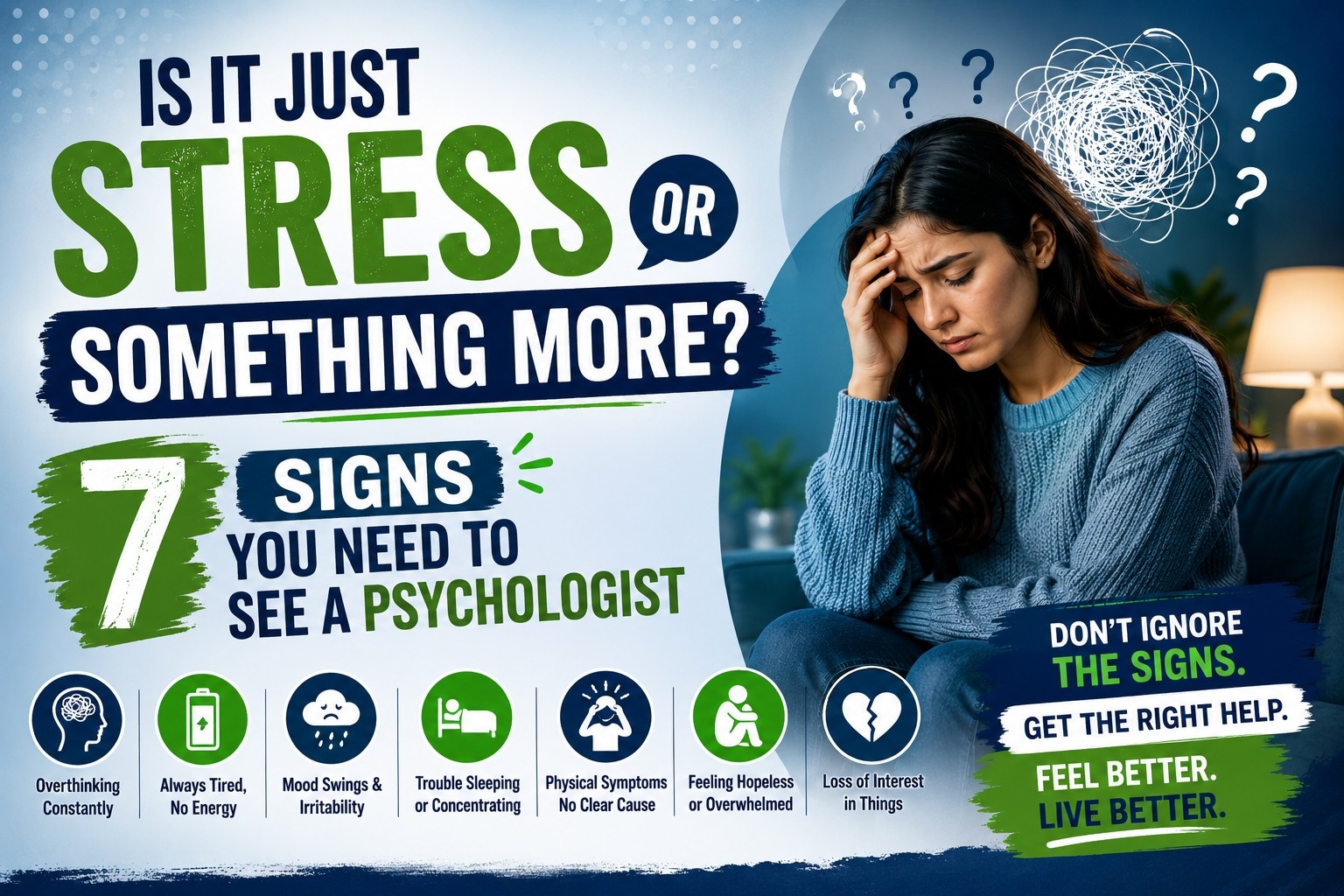
You know that feeling where you tell yourself “I’m just tired” for the third week in a row? Where do you blame the workload, or the weather or not sleeping well last night and somehow that explanation keeps getting recycled, week after week, without ever quite resolving? Most of us do this. Stress is so normal that we’ve gotten good at explaining it away. And honestly, most of the time that’s fine stress is supposed to come and go. The problem is when it stops going.
This essay is not aiming to persuade you that you are somehow suffering or to terrify you into thinking every negative day implies something is wrong. It’s just meant to help you see the difference so that you’re not left wondering if what you’re experiencing is severe enough to discuss with someone should it ever apply to you. Spoiler: Usually it isn’t worth a conversation with such gravity required.
So, What Actually Counts as Normal Stress?
Stress is just your body’s reaction to pressure. Something demands more of you than usual: a deadline, a fight with someone you love, money worries and your body responds. My heart rate goes up. Focus narrows. You get a burst of energy meant to help you deal with whatever’s in front of you.
Short-term stress before an exam, during a hectic week, around a big change is something basically everyone deals with. It’s uncomfortable but it passes. Chronic stress is the one that doesn’t pass. It just sits there for weeks or months, sometimes without an obvious cause at all, slowly wearing things down.
When Does It Stop Being “Just Stress”?
Here’s the thing there’s rarely a clear line. Nobody wakes up one day and thinks, “ah, this has officially become a mental health concern now.” It’s gradual. A little more tired than usual. A little shorter with people. A little more avoidant of stuff you’d normally just deal with.
Two factors set ordinary stress apart from something more serious: how long it lingers and how broadly it spreads. Usually linked to something particular, regular stress disappears after that event passes. Usually the indication your worry has surpassed the just a bad patch explanation when it shows up on good days too and starts impacting your job, sleep, relationships, even your physical health.
7 Signs You Might Want to Talk to a Psychologist
1. Sadness That Doesn’t Lift
Everyone has a bad week. This is different: it’s weeks of feeling emotionally flat or drained, where the things that used to feel good just don’t anymore. Not sad about anything specific. Just sad, as a baseline.
2. Worry That Won’t Turn Off
A bit of nervousness before something big is normal. What’s worth noticing is worry that doesn’t respond to logic, that follows you around regardless of what’s actually happening that day. Sometimes it even shows a physically tight chest, restless legs, jaw you didn’t realize you’d been clenching.
3. Everyday Stuff Starts Feeling Like Too Much
Laundry, replying to messages, making dinner things that used to be background noise suddenly feel like climbing a hill. Not because they’re hard. Because there’s nothing left to do with them.
4. Sleep or Appetite Goes Sideways
Either direction counts here lying awake for hours despite being exhausted, or sleeping far more than usual and still feeling wiped out. Same with eating: barely touching food, or reaching for it constantly without really tasting it. On their own, these things happen sometimes. As a pattern, they’re worth paying attention to.
5. Pulling Away From People
Not answering texts that used to be easy. Saying no to plans you’d normally say yes to without thinking. It’s not that you don’t care about people, it’s that being around them suddenly costs more energy than you have. This one’s sneaky because it often feels like “I just need some space,” which is sometimes true and sometimes a sign of something bigger.
6. Brain Just Won’t Cooperate
Rereading the same line three times. Losing your train of thought mid-sentence. Forgetting things you’d normally never forget. People sometimes call this brain fog, and it’s especially noticeable at work or school, where focus is kind of the whole job.
7. Reacting Bigger Than the Situation Calls For
Snapping at someone over something small. Crying and not totally sure why. Anger that flares up out of nowhere. It’s less about having an emotional moment everyone does and more about feeling like your reactions don’t match you anymore.
If a few of these have been hanging around for more than a couple of weeks, that’s generally worth a conversation with someone. Not because something is necessarily “wrong” with you. Just because it’s worth understanding what’s actually going on instead of guessing.
Why People Choose Nirvan Hospital for This
Seeking expert assistance can be a significant step toward feeling better when stress starts to impact your daily life. Nirvan Hospital uses qualified specialists who adhere to evidence-based assessment and treatment methods to provide complete mental health care. Every consultation is private so that people can freely talk about their worries in a friendly and encouraging environment. Rather than following a universal approach, treatment plans are tailored to every person’s particular requirements, symptoms and objectives. Care can cover psychological evaluations, therapy, counselling, stress reduction techniques and routine follow-up help, depending on the circumstances. Nirvan Hospital seeks to assist people grow better coping mechanisms and raise their general emotional well-being over time with a patient-centred approach that honors empathy, understanding and expert advice.
Final Thoughts
Being alive entails some stress; no one goes through life without some of it. But there is a great difference between stress that comes and goes and something that settles in and gently controls the scene. Learning to identify that difference is really helpful as it means you don’t have to wait till everything seems impossible before taking action on it.
Reaching out for help isn’t an admission that something’s broken. It’s just a normal, proactive thing to do the same as you’d see a doctor for anything else going on with your body. If this has been hitting close to home lately, talking to a psychologist at Nirvan Hospital is a reasonable, low-pressure place to start. It does get better. And more often than people expect, the hardest part is just the first step of reaching out.
Frequently Asked Questions
How do I know if my stress is becoming a mental health problem?
Most of the time, it depends on its range and how long it lasts. Usually, if it has been affecting your sleep, relationships, career or physical health for a few weeks or if it doesn’t go away after the first trigger has passed, it suggests it has advanced past normal stress and calls for a thorough talk with someone.
When should I see a psychologist for stress?
If it’s stuck around for more than a couple of weeks without letting up or it’s getting in the way of you functioning normally, that’s a reasonable point to stop waiting it out. You don’t need to hit some dramatic breaking point first; earlier is genuinely easier to work with.
Can stress cause physical health problems?
Indeed, a weakened immune system, headaches, digestive problems, elevated blood pressure and disturbed sleep are all associated with chronic stress. Since the body and mind are not truly distinct systems, emotional stress that persists for an extended period of time often manifests physically as well.
How long does therapy usually take?
Honestly, it depends a lot on the person and what’s being worked through. Some people feel like a handful of sessions does what they need. Others stick with it longer for deeper or longer-running patterns. A psychologist can give you a better sense after that first conversation.
What lifestyle changes can reduce stress?
Sleeping properly, exercising frequently, eating sensibly, spending a few quiet times for yourself, reducing screen time and maintaining relationships with others are all really beneficial. While they don’t take the place of expert assistance when it’s required, they do significantly improve it when combined with it.
Comments are closed