Subtotal ₹0.00

 Self Assessment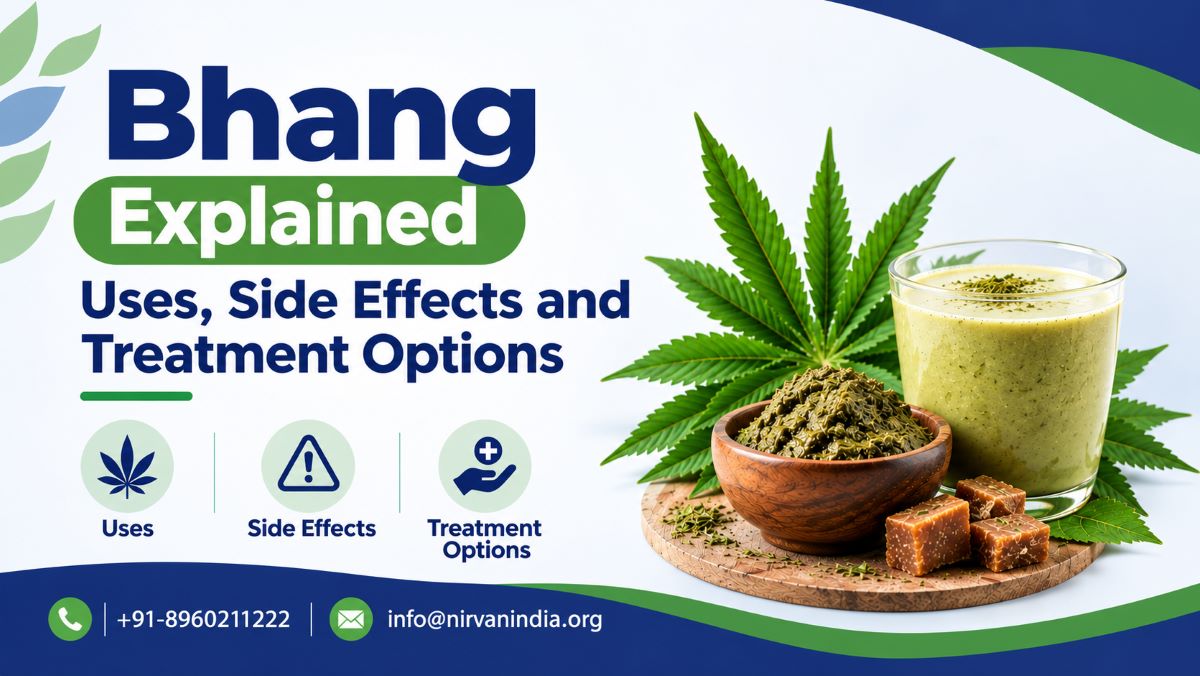
Bhang is a traditional cannabis preparation that has been used in India for centuries, particularly in certain cultural and religious settings. Because of its traditional association, some people may assume that bhang is harmless. However, bhang contains cannabinoids, including THC, that can affect the brain and body.
Depending on the amount consumed, the potency of the preparation, individual sensitivity and pattern of use, bhang can have different effects. While some people may use bhang occasionally, frequent or heavy use can negatively affect psychological well-being, relationships and everyday functioning.
Bhang addiction is a commonly used term for problematic or dependent cannabis use. Clinically, a healthcare professional may assess whether a person meets criteria for cannabis use disorder (CUD). Professional treatment for problematic bhang or cannabis use may be appropriate when a person’s health, relationships, work, education or daily functioning are being negatively affected.
This guide explains what bhang is, what can happen after consuming too much, what symptoms to watch for, what treatment options are available, what cannabis withdrawal may feel like and when to seek professional help.
People experiencing problems with bhang or cannabis use can seek professional assessment and addiction-related support at Nirvan Hospital based on their individual needs. Where required, treatment can also address co-occurring mental health concerns.
What Is Bhang?
In India, bhang is a cannabis-based concoction that is customarily ingested. It can be made as a beverage or added to food preparations.
Compared to some other kinds of cannabis use, the effects of bhang may take longer to manifest because it is typically taken orally. Because of this, a person may occasionally take more before experiencing the full effects.
Bhang’s effects can vary because its potency may differ depending on how it is prepared and how much is consumed. Cannabis contains several cannabinoids, including THC, which is responsible for many of its psychoactive effects.
Traditional use does not necessarily mean that bhang is safe or medically appropriate for everyone. Individual responses can vary and people experiencing problems with cannabis use may benefit from professional assessment.
How Does Bhang Affect the Brain and Body?
THC engages brain cannabinoid receptors to briefly affect perception, memory, coordination, mood, attention and reaction time.
Depending on the individual and the amount consumed, possible effects may include:
- Relaxation or euphoria
- Drowsiness
- Increased appetite
- Altered perception
- Changes in the sense of time
- Reduced concentration
- Slower reaction time
- Impaired coordination
- Anxiety or nervousness
- Increased heart rate
Everyone experiences different outcomes. Though some people could feel at ease, others may get nervous, panicked, disoriented or uncomforting changes in view.
Also, a person’s intake of a lot or erratic amount might raise the risk of adverse consequences.
What Are the Traditional Uses of Bhang?
In India, bhang has a rich cultural and traditional past. It has typically been eaten in specific religious and cultural settings and is also linked to claimed relaxing or soothing properties.
Still, conventional use and medical care differ from one another.
Bhang shouldn’t be thought of as a substitute for expert care of anxiety, depression, sleep issues or other medical conditions. Talking to a trained healthcare expert can help someone using cannabis to control emotional or psychological problems find better and more appropriate treatments.
What Are the Side Effects of Bhang?
The side effects of bhang can vary depending on the amount consumed, individual sensitivity and other factors.
Possible short-term effects include:
- Drowsiness
- Poor concentration
- Slower reactions
- Impaired coordination
- Anxiety
- Restlessness
- Changes in perception
- Increased heart rate
- Confusion
- Nausea or other unpleasant physical sensations
Occasionally, cannabis intoxication might be related to more severe psychological symptoms, particularly in people sensitive to such reactions or following significant use.
Special treatment may be necessary for those with present or underlying mental health issues if marijuana use is related to significant changes in mood, perception, cognition or conduct.
One should be concerned about persistent suspicion, severe disorientation, hallucinations, significant agitation or notable behavioral changes after consuming bhang and these could need immediate medical attention.
What Are Cannabis Withdrawal Symptoms After Stopping Bhang?
People who use cannabis frequently or heavily may experience withdrawal symptoms after reducing or stopping use.
Possible symptoms include:
- Irritability
- Anxiety or nervousness
- Restlessness
- Sleep difficulties
- Reduced appetite
- Low mood
- Anger or frustration
- Headaches
- Strong cravings
- Difficulty concentrating
- Vivid or unusual dreams
WHO guidance notes that cannabis withdrawal is generally managed in a supportive environment, with symptomatic treatment when required.
Each person has different withdrawal symptoms. Professional medical help should be thought about if symptoms are serious, ongoing or coupled with major psychological issues.
Who May Need Bhang Treatment?
Professional Bhang treatment may be appropriate when cannabis use begins interfering with a person’s health or everyday life.
Treatment may be helpful when:
- Bhang use has become frequent or difficult to control
- The person experiences repeated cravings
- Previous attempts to stop have not worked
- Withdrawal symptoms occur after stopping
- Work, studies, or relationships are being affected
- The person relies on bhang to cope with emotional distress
- There are co-existing anxiety, depression, sleep or behavioral concerns
- Cannabis use is accompanied by significant psychological or social problems
Seeking care does not indicate a person has failed. Early professional support may help stop the issue from worsening and substance use disorders may be treated.
What Does Bhang Treatment Involve?
Every person receives different treatment. The person’s cannabis use, mental and physical health, withdrawal symptoms, family situation and recovery requirements will all help to guide the strategy.
| Treatment Approach | What It May Include |
| Clinical Assessment | Understanding the person’s cannabis use, symptoms, health and treatment needs |
| Psychological Therapy | Working on cravings, triggers, thoughts and behaviours related to substance use |
| Withdrawal Support | Providing appropriate support for withdrawal-related symptoms when needed |
| Relapse Prevention | Identifying triggers and developing healthier coping strategies |
| Family Support | Helping family members understand the recovery process and provide appropriate support |
| Mental Health Care | Addressing co-existing mental health concerns when they are present |
A Bhang treatment plan may involve several stages.
Is There Medication for Bhang Addiction?
Right now, no one drug works as a universal treatment for cannabis use disorder.
Treatment usually consists in psychological and behavioral techniques together with supportive withdrawal symptom control when required. Although study on drug-based strategies goes on, no drug ought to be started especially for cannabis addiction without professional medical guidance.
A psychiatrist or doctor can evaluate and treat separately any other medical or mental condition a patient has that calls for medication.
Self-medicating for withdrawal symptoms, anxiety, desire or sleep issues is not advised.
How Long Does Bhang Treatment Take?
The duration of Bhang treatment varies from person to person.
Someone with occasional problematic use may need a different level of support from someone who has been using cannabis heavily for a long period.
Treatment duration can also be influenced by:
- Severity of substance use
- Withdrawal symptoms
- Co-existing mental health conditions
- Previous treatment attempts
- Family and social support
- Risk of relapse
Recovery is not always linear. Following the first course of therapy, some people could find help from ongoing counseling, follow-up visits, family support and relapse-prevention techniques.
One should not just aim to stop using bhang for a while. Long-term care seeks to assist the individual acquire better coping skills and keep their recovery going.
What Can Families Do to Help Someone With Bhang Addiction?
Families often notice changes in behavior before the person recognizes that their cannabis use has become a problem.
A supportive approach is usually more helpful than blame or humiliation.
Family members can:
- Choose a calm time to talk
- Express concern without judgment
- Focus on specific changes they have noticed
- Support professional assessment
- Stay away from trying to hide the effects of drug abuse
- Promote good customs
- Support treatment and follow- up
- Learn about addiction and relapse
- Pay close attention to really bad psychological symptoms
Family support can complement professional treatment, but it should not replace medical or psychological care.
When Should You Seek Professional Help?
If bhang use is getting difficult to manage or is interfering with daily life, consider seeing a psychiatrist, psychologist or addiction specialist.
Professional help is especially important when someone:
- Cannot stop despite repeated attempts
- Experiences strong or persistent cravings
- exhibits severe withdrawal symptoms
- is ignoring obligations to one’s family, career or education
- has significant behavioral or emotional changes
- uses bhang as a coping mechanism for emotional issues
- has significant disorientation, hallucinations or paranoia
- Continues using despite clear negative consequences
Seek immediate emergency medical attention if someone experiences extreme confusion, loss of consciousness, seizures, trouble breathing, excruciating chest discomfort or another possibly life-threatening symptom following cannabis product consumption.
Key Takeaways
- Bhang is a cannabis preparation containing psychoactive cannabinoids, including THC.
- Its effects can vary depending on the preparation, amount consumed, individual sensitivity and pattern of use.
- Short-term effects may include relaxation, altered perception, drowsiness, impaired coordination, anxiety and changes in heart rate.
- Regular or heavy cannabis use can lead to cravings, difficulty controlling use, withdrawal symptoms and problems in daily life.
- Bhang addiction is commonly used to describe problematic or dependent cannabis use; healthcare professionals may assess this as cannabis use disorder.
- Treatment for problematic bhang or cannabis use is individualized and may include clinical assessment, counseling, behavioral therapy, family support, relapse prevention and treatment of co-existing mental health concerns.
- Cannabis withdrawal can cause symptoms such as irritability, anxiety, sleep difficulties, reduced appetite, restlessness, low mood and cravings.
- Professional help is particularly important when a person cannot control their use, repeatedly tries to stop without success or experiences significant psychological or functional problems.
Final Thoughts
Bhang has a long history, but its traditional usage doesn’t mean it’s safe. Since bhang contains psychoactive cannabinoids, it can affect mood, awareness, concentration, coordination and everyday functioning.
Prolonged usage might get difficult for some individuals to control and cause problematic cannabis use or Bhang Addiction.
The main thing is that support is at hand. Professional evaluation, psychological counseling, encouraging withdrawal management, family participation, relapse prevention and treatment of co-occurring mental health issues can all be part of bhang treatment.
Early expert support can be a major step toward recovery if bhang use is starting to compromise a person’s health, relationships, education, job or ability to handle daily life.
Should you or someone you know be having problems with bhang or cannabis use, Nirvan Hospital can offer expert psychological and addiction-related assessment and help. Early assistance seeking can help one to grasp the issue and investigate suitable courses of action.
Frequently Asked Questions
Is bhang addictive?
Regular or heavy cannabis use can become problematic and may lead to cannabis use disorder. A person may be at greater concern when they experience cravings, loss of control, withdrawal symptoms or continue using despite negative consequences.
What are the common side effects of bhang?
Possible effects include drowsiness, impaired coordination, reduced concentration, altered perception, anxiety, restlessness, increased heart rate and confusion. The intensity can vary depending on the preparation and amount consumed.
What are the signs of Bhang Addiction?
Common warning signs include difficulty controlling use, repeated unsuccessful attempts to stop, strong cravings, continued use despite problems, neglect of responsibilities and withdrawal symptoms after stopping.
Can Bhang Addiction be treated?
Yes. Problematic cannabis use can be treated. Treatment may include assessment, psychological therapy, behavioral interventions, family support, withdrawal management and relapse-prevention planning.
Can someone stop using bhang without treatment?
Some people may be able to stop without formal treatment, particularly when use is occasional. However, professional support can be valuable when use is frequent, difficult to control, associated with withdrawal or accompanied by mental health or social problems.
Comments are closed