Subtotal ₹0.00

 Self Assessment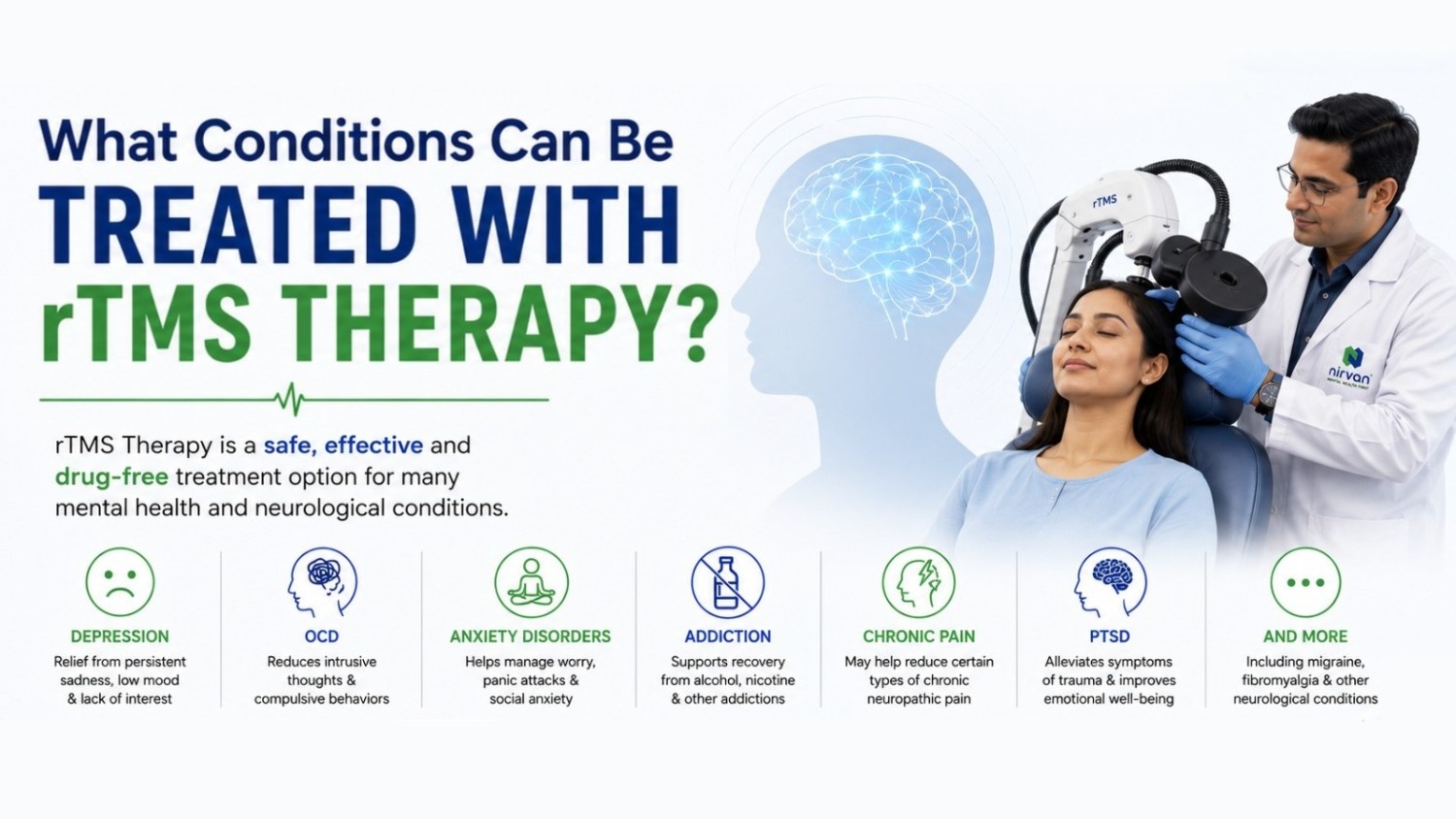
Some mornings getting out of bed feels like climbing a mountain. Some days your mind won’t stop no matter how much you try to push the ideas away. Some evenings are spent awake, heart hammering, scared of tomorrow for no obvious reason you can completely explain.
Many people greatly benefit from treatment and medicine. Though not for everyone. Some people spend years trying various antidepressants, attending regular meetings, trying every conceivable lifestyle change just to realize they are still stuck. Not because they are not trying. Every brain is unique, thus what fits one person might not at all fit another.
More current treatments like Repetitive Transcranial Magnetic Stimulation, or rTMS therapy, are filling the gap. There isn’t a miraculous cure here. For the ideal applicant, however, it could be the turning point they have been expecting. This handbook discusses what rTMS treatment is, what conditions it could help with, and what you may expect if you are considering it.
What Is rTMS Therapy and How Does It Work?
Fundamentally, rTMS is a technique of communication with the brain free of surgery, drugs, and patients under anaesthesia.
The scalp is softly rested with a tiny electromagnetic coil. It provides focused magnetic pulses with the same intensity as those used in an MRI scan that cross the skull safely and stimulate particular nerve cells in target brain areas. The patient senses a mild tapping on the scalp. Usually able to sit and unwind during the session or have a calm conversation, they are totally alert, totally conscious, and fully aware.
The brain is an electrical organ. Different regions manage different aspects of our inner world: our mood, our ability to feel pleasure, our fear responses, our impulse control. In many mental health conditions, some of these circuits become stuck either overactive or underactive in ways that medication alone doesn’t always correct. rTMS works by gently nudging these circuits in a healthier direction, session by session, over a course of treatment.
What Actually Happens During Treatment?
Every session runs about twenty to forty-five minutes. You lounge in a cozy chair. The coil rests on your head. The beats start Most individuals describe a rhythmic tapping sound and sensation that first feels a little strange but seldom painful. Once the class is over, you can get up, gather your belongings and head home. There is nothing preventing you from driving or returning to work, no tiredness, no recovery time.
With numerous sessions each week, a complete course of therapy usually lasts many weeks. Your condition, how you’re reacting, and your psychiatrist’s clinical judgement all affect the precise amount. Since no two patients are exactly the same, no two treatment plans at Nirvan Hospital are precisely similar.
rTMS Therapy for Depression
Depression more precisely, treatment-resistant depression, the clinical word for depression that has not responded well enough to antidepressant drugs is one condition for which rTMS has the most solid and most established data.
Patients who react well often characterize the change as slow brightening rather than an abrupt change, so gradual. Sleep gets better. The drive to act begins to come back. Little moments of delight open up once more. It doesn’t happen overnight and not everyone reacts the same way. For many who had started to give up hope, the results have been really transformative.
rTMS works best with other support that is, counseling, lifestyle changes, or closely controlled medication. It’s a strong complement to a therapy plan, not a replacement for everything else.
rTMS for OCD (Obsessive-Compulsive Disorder)
OCD is one of the most misunderstood mental health diseases. Almost scratching the surface is the recognizable picture of someone who values order and cleanliness. Intrusive, unwanted, often quite disturbing thoughts that won’t go away define genuine OCD. And the person creates habits or actions to momentarily reduce the anguish only for the cycle to start again, sometimes several times daily, as those ideas cause so much anxiety.
It’s never employed only for OCD; It fits in with a larger, organized scheme. For those who feel trapped in the OCD cycle notwithstanding current therapy, however, it offers a really significant alternative worth talking about with a doctor.
Can rTMS Help with Anxiety Disorders?
Anxiety is the brain’s alarm system working overtime. Whether it’s generalised anxiety, social anxiety, panic disorder, or other disorders that repeatedly cause alarms often without a reasonable cause anxiety disorders. The body keeps stiff. The mind maintains a condition of low-level anxiety. And over time, that continuous activation truly wears one out.
Research on rTMS treatment for anxiety is more recent and less definitive than for OCD or sadness; one must be honest about that. Most anxiety disorders are not now considered first-line treatments for rTMS on its own. If anxiety is a problem for you, you should first see a psychiatrist for a thorough examination. They can determine if rTMS is likely to be useful or, if not, guide you toward the best strategy.
rTMS Treatment for Addiction and Substance Use Disorders
One of the things that makes addiction so difficult to understand from the outside and so difficult to live through from the inside is that it isn’t really about the substance. It’s about what has happened to the brain.
rTMS treatment for addiction is an area of active and promising research. Studies have examined whether stimulating parts of the prefrontal cortex, the part most in charge of self-control and rational decision-making, may help reduce appetite volume and improve brain impulse resistance. For alcohol, nicotine, and other drugs, some research results have been optimistic.
This is something worth discussing with an addiction psychiatrist who can help you or someone close to you negotiate addiction recovery and evaluate whether rTMS may have a part.
Other Conditions That May Benefit from rTMS Therapy
The field of rTMS research is still developing and there are a number of other diseases for which it is being examined or applied in clinical settings:
PTSD:- Post-Traumatic Stress Disorder alters the brain’s processing of memory and danger. People who live with PTSD often find themselves caught in a hypervigilance loop, tormented by intrusive memories, and unable to feel safe even in obviously safe environments. Though more research is being conducted, some studies point to rTMS possibly assisting control the overactive fear responses seen in PTSD.
Chronic Pain:- Certain types of persistent pain particularly where the pain signal has become embedded in the nervous system beyond the original injury may involve altered brain processing. rTMS is being studied as a way to modulate pain perception pathways, offering potential relief for people who have lived with chronic pain for years without adequate management.
Aspects of Neurological Recovery:- Research has explored rTMS in areas like tinnitus and stroke rehabilitation, though these remain specialist applications requiring very careful individual assessment.
Bipolar Depression:- For the depressive phase of bipolar disorder, rTMS may in carefully selected cases be considered under close specialist supervision. This is an area requiring particular caution and should only ever be explored under the guidance of a psychiatrist experienced in bipolar care.
In all of these areas, the keyword is individual assessment. What is appropriate for one person may not be appropriate for another and that’s not a limitation of the treatment, it’s just the reality of how complex the human brain is.
The Benefits of rTMS Therapy That Matter Most to Patients
People who inquire about the advantages of rTMS therapy typically seek something more personal than a clinical inventory. They want to find out: Will my life include this? Will it hurt? Will I be able to keep working? Here’s what most patients find:
- No operation, no needles, no anaesthesia It is almost as non-invasive as a medical technique can be.
- Sessions blend with actual life Most individuals book meetings then rush home or to work without any breaks.
- If they happen, side effects are typically minor. Early sessions often cause a brief headache or sensitivity in the scalp that usually passes fast.
- It does not replace your other care. It supports what you are already doing by building instead of interfering with your current care.
- Many people, even those who have battled the negative effects of psychiatric drugs, tolerate it well.
None of this suggests it’s appropriate for everyone. For those who have been searching for something that would lessen an already stressful circumstance, nevertheless, these characteristics are important.
Why Choose Nirvan Hospital for rTMS Therapy?
The crew providing rTMS therapy determines its quality quite greatly. Though the technology counts, so does the clinical knowledge, the caliber of evaluation, the attention taken in customizing the therapy, and the support given all along. The way rTMS is done at Nirvan Hospital is based on a few things that actually make a difference:
Experienced experts:- who grasp not only the academic definition of rTMS but also the practical use of the approach in challenging real-world patients.
Personal care:- Customized care planning considers your complete diagnosis, past therapies, concerns, and objectives rather than using a one-size-fits-all approach.
Advanced rTMS equipment:- calibrated and maintained to clinical standards, with the technical precision that this kind of treatment requires.
Holistic care:- Nirvan Hospital does not offer holistic treatment or rTMS in isolation. It is part of a full mental health service including psychiatric evaluation, psychotherapy, and continuous support that is, you are getting care rather than only treatment.
A human environment:- Mental health care in a human environment calls for trust, which is created via honesty, patience, and real curiosity. The Nirvan Hospital staff is dedicated to creating a setting where people may freely inquire and use their time to make wise decisions.
Final Thoughts
Mental health treatment has never been more sophisticated than it is today and rTMS is a genuine part of that progress. For people with treatment-resistant depression, it has already changed lives. For people with OCD, anxiety, addiction, and other conditions, research is continuing to show what’s possible.
The next stage is just a talk. A thorough evaluation with a psychiatrist who takes the time to grasp your unique background and assist you in determining whether rTMS is really beneficial. At Nirvan Hospital, that conversation is always the starting point. Because good mental health care doesn’t begin with a procedure. It begins with being heard.
Frequently Asked Questions(FAQs)
The most established use is treatment-resistant depression. rTMS is also used clinically for OCD and is being studied for anxiety disorders, addiction recovery, PTSD, chronic pain and in selected cases of bipolar depression. Every application requires individual assessment.
No. While depression has the strongest evidence base, rTMS is increasingly used and researched across a range of conditions. That said, the level of evidence varies by condition, which is why an honest, informed conversation with a psychiatrist matters before starting treatment.
It isn’t accurate to describe rTMS or most psychiatric treatments as a permanent cure. What it can do is significantly reduce symptoms and improve functioning for many people. Some experience long-lasting improvement; others benefit from occasional maintenance sessions. Outcomes are individual and depend on many factors including the rest of the treatment plan.
It has a well-established safety record and has regulatory approval in several countries for depression treatment. The most common side effects are mild occasional headache or scalp sensitivity early in the course. Serious side effects are rare when the procedure is carried out by trained professionals. A thorough assessment before starting ensures it’s only recommended where appropriate.
Yes in fact, this is how it is most often used. rTMS is a complement to existing treatment, not a replacement. Most patients continue their medication and therapy while undergoing rTMS and the combination often produces better outcomes than either approach alone.
rTMS (repetitive Transcranial Magnetic Stimulation) therapy is not a permanent cure, but it can provide long-lasting improvement in symptoms for conditions like depression, OCD, and some other mental health disorders.
Many patients experience relief for months or even longer, but the effects can reduce over time. Some people may need maintenance or repeat sessions to sustain benefits. The best results are usually seen when rTMS is combined with medication, therapy, and healthy lifestyle changes.
Yes, depression can come back after rTMS therapy. While rTMS can significantly reduce symptoms and provide long-lasting relief for many people, it does not permanently eliminate the underlying tendency for depression in all cases.
Relapse may happen due to stress, stopping medication or therapy, or underlying biological factors. Some patients may need maintenance rTMS sessions, along with medication, psychotherapy, and lifestyle management to reduce the risk of recurrence and maintain stability over time.
rTMS is not a permanent cure, but it can provide long-lasting relief from symptoms of depression or OCD in many patients. Some people remain well for months or even longer after treatment, while others may need maintenance or repeat sessions.
Its effectiveness depends on individual response, severity of illness, and continued care like medication, therapy, and lifestyle management. It is best seen as a long-term management tool rather than a permanent solution.
The results of rTMS treatment vary depending on the individual and condition being treated. Many patients with depression or OCD experience reduced symptoms, improved mood, better sleep, and increased energy after completing a full course of sessions.
Some people achieve full remission, while others get partial improvement. Benefits may last for months or longer, but some patients may need maintenance sessions. Overall, rTMS is most effective when combined with medication, therapy, and lifestyle changes.
The success rate of rTMS for anxiety is around 50–70% for noticeable symptom improvement. It works best when anxiety is linked with depression or OCD. Results vary by person and are stronger when combined with medication, therapy, and lifestyle changes.
rTMS (repetitive Transcranial Magnetic Stimulation) is used to treat several mental health conditions, mainly depression, especially treatment-resistant depression. It is also used for OCD, and in some cases for anxiety disorders, PTSD, and addiction-related symptoms.
It works by stimulating specific areas of the brain involved in mood and behavior regulation, helping improve emotional balance, reduce symptoms, and enhance daily functioning when medications alone are not effective.
Comments are closed